GM Cars - Different Models Under One Roof

GM cars are found all over the world. This can be explained by the fact that GM is the world's largest auto company by annual production volume for 2006. GM automobiles are sold under diverse models.With its main headquarter located in Detroit, Michigan, USA, GM manufactures cars and trucks in 33 countries. In 2006, 9.18 million GM cars and trucks were produced globally under the following brands: Buick, Cadillac, Chevrolet, GMC, Holden, Hummer, Opel, Pontiac, Saab, Saturn and Vauxhall. GM is the majority shareholder in GM Daewoo Auto & Technology Co. of South Korea and has had collaborative ventures in technology and manufacturing with several of the world's automakers. GM's largest national market is the United States, followed by China, Canada, the United Kingdom, and Germany. GM half owns a finance company, GMAC Financial Services, which offers automotive, residential and commercial financing and insurance. GM's OnStar subsidiary is a vehicle safety, security and information service provider.

Automotive marques of General Motors
Buick Cadillac Chevrolet GMC Holden Hummer Opel Pontiac Saab Saturn Vauxhall Affiliates
GM Daewoo (50.9%) Suzuki (3%) Wuling (34%) Defunct marques Acadian (1962-1971) Asüna (1992-1995) Beaumont (1966-1969) Bedford Vehicles (1930-1999) Geo (1989-1997) LaSalle (1927-1940) Marquette (1929-1930) Oakland (1907-1931) Oldsmobile (1897-2004) Passport (1988-1991) Ranger (1968-1976) Statesman (1971-1985) Viking (1929-1931)
Two people primarily shaped the history of GM - William C. Durant and Alfred Sloan. The former founded the company on September 16, 1908 and under his watch, GM acquired Cadillac, Elmore, Oakland (later known as Pontiac), Reliance Motor Truck Company, the predecessors of GMC Truck, and several others. Alfred Sloan who succeeded Durant was in charge of the corporation when it dominated the auto market. The global domination would last through the late 70's and into the early 80's. The 1960s saw the creation of compact and intermediate classes in response to the threat by Volkswagen, Renault , Hillman, and Datsun who, starting in the mid 50's made some inroads into the American auto market. The "Big Three" also had to compete against each other and which resulted in some GM cars like the Corvair. The Chevrolet Corvair was a 6-cylinder answer to the Volkswagen Beetle, the Chevy II was created to match Ford's conventional Falcon and the Chevrolet Camaro/Pontiac Firebird was GMs counter measure to the Ford Mustang. Among intermediates, the Oldsmobile Cutlass nameplate became so popular during the 1970s that Oldsmobile applied the Cutlass name to most of its products in the 1980s. By the mid 1960s, most of GM's vehicles were built on a few common platforms and in the 1970s GM began to use nearly identical body panel stampings, differing only in internal and external trim items.
RoadLoans - The Best Way To Find A Better Auto Loan!
The 1971 Chevrolet Vega was GMs launch into the new subcompact class. During the late 1970s, the company would initiate a wave of downsizing starting with GM cars like the Chevrolet Caprice which was reborn into what was the size of the Chevrolet Chevelle, the Malibu would be the size of the Nova, and the Nova was replaced by the troubled front-wheel drive Citation.GM cars suffered design "identity crisis" and this became more marked by the 1980s. GM frequently "rebadged" one division's successful vehicle into several models across the divisions, all positioned close to one another in the market place. This resulted in market "cannibalization" with the divisions spending time stealing sales from one another, hampering creativity and innovation. A good example of that (which is still happening today) is the basic truck platform of Chevrolet Trailblazer, Oldsmobile Bravada, GMC Envoy, Isuzu Ascender, Buick Rainier and Saab 9-7X all spawned by the GMT360 mid-sized light truck platform. Though each model had a more or less unique mission, the trucks can hardly be discerned from one another resulting in customer confusion. In the late 1990s, the U.S. economy was on the rise and GM gained market share producing enormous profits primarily from the sale of light trucks, sport-utility vehicles and some best-selling GM cars.
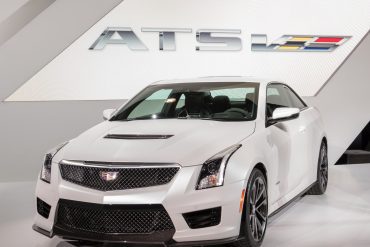
In the 2000's, GM had to device new strategies with the rise in fuel prices (of as much as 50%). GM started developing hybrid trucks which GM touted as improving gas mileage by as much as 25%. In the summer of 2005, GM announced that its corporate chrome emblem "Mark of Excellence" will begin appearing on all recently introduced and all-new 2006 model vehicles produced and sold in North America. The move is seen as an attempt by GM to link its name and vehicle brands more closely. Another strategy with mixed results is the introduction of an employee discount to all buyers. It was seen as a move to clear the 2005 inventory to make way for the 2006 lineup. With China's industrial ascendancy in the new century, GM positioned itself by capturing a large market. GM cars whcich are selling well are the Buick Excelle subcompact and the Cadillac (starting in 2004). GM pushed the marketing of the Chevrolet brand in China in 2005 as well, moving the former Buick Sail to that marque. The company manufactures most of its China-market vehicles locally, through its Shanghai GM joint venture. The SAIC-GM-Wuling Automobile joint-venture is also successful selling trucks and vans under the Wuling marque. Important GM personalities
- Alfred P. Sloan
- William C. Durant
- Richard Wagoner
- Robert Lutz
Automakers GM Cars Toyota Cars Ford Cars Volkswagen Cars Honda Cars Peugeot Cars Nissan Cars Chrysler Cars Renault Cars Hyundai Cars Fiat Cars Suzuki Cars Daimler Cars Mazda Cars Kia Cars BMW Cars
HOME
|