





A Concise History of Cars
Automobile History In the Early Days
The history of cars involved people from different countries who, in ways large and small, contributed to its development. The automobile as we know it started from crude but machines that by degrees underwent transformation due to dedicated work by several people. It is estimated that over 100,000 patents created the modern automobile. However, we can point to the many firsts that occurred along the way. Starting with the first theoretical plans for a motor vehicle that had been drawn up by both Leonardo da Vinci and Isaac Newton.
The first recorded use of a self-powered vehicle was in 1769 when Nicolas Cugnot, a French military engineer, designed and built an awkward but workable three-wheeled vehicle powered by a steam engine. The vehicle was intended as a tractor for hauling heavy cannons.
A second unit was built in 1770 which weighed 8000 pounds and had a top speed of 2 miles per hour and which ran on the cobblestone streets of Paris. The vehicle was intended as a tractor for hauling heavy cannons. It had a short career, ‘tho. It went out of control during a trial run and crashed adding a colorful chapter in the history of cars. It’s been alleged that Cugnot was also the first person to be involved in an auto accident, an interesting trivia in the history of cars.
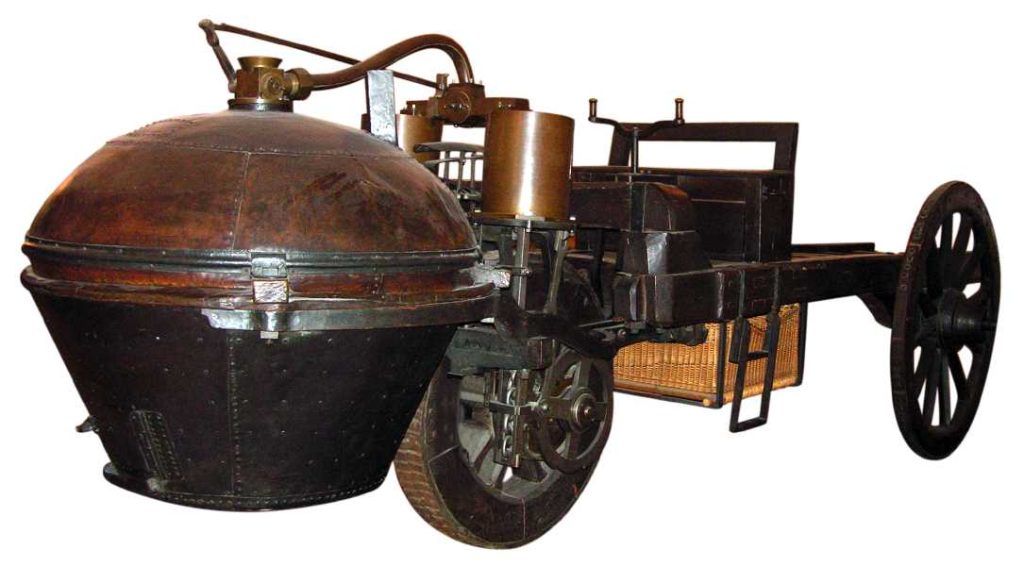
Steam engines powered cars by burning fuel that heated water in a boiler, creating steam that expanded and pushed pistons that turned the crankshaft, which then turned the wheels. During the early history of cars – both road and railroad vehicles were being developed with steam engines. (Cugnot also designed two steam locomotives with engines that never worked well.) Steam engines added so much weight to a vehicle that they proved a poor design for road vehicles; however, steam engines were very successfully used in locomotives. Historians, who accept that early steam-powered road vehicles were automobiles, feel that Nicolas Cugnot was the inventor of the first automobile.
The history of cars continued on Christmas Eve, 1801, when frightened British farmers rushed to their windows to witness the first practical use of mechanical power to move a vehicle. What they saw was a smoke-belching, steam-powered carriage moving without being pulled by a man or an animal.
The history of cars continued on Christmas Eve, 1801, when frightened British farmers rushed to their windows to witness the first practical use of mechanical power to move a vehicle. What they saw was a smoke-belching, steam-powered carriage moving without being pulled by a man or an animal.
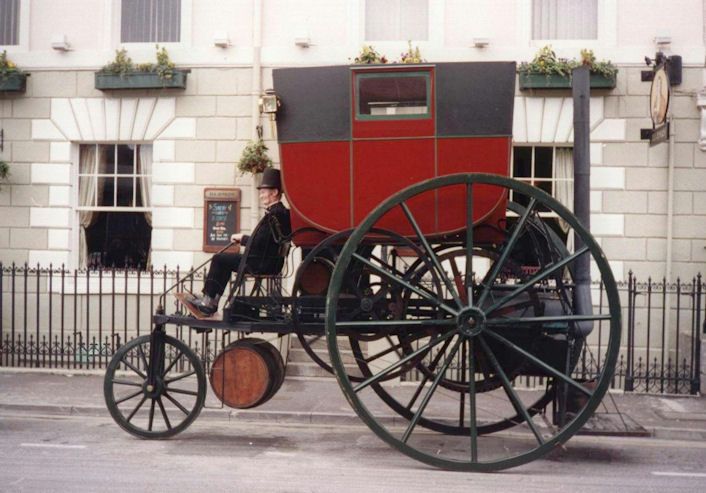
It was driven by their neighbor Richard Trevithick and he was driving the world’s first true “automobile”. An automobile is a self-propelled land vehicle that can carry passengers or freight. Trevithick’s self-propelled carriage could carry passengers over land at a speed of nearly 10 miles per hour. And only if those neighbors knew at that time – a page in the history of cars had been unfolding.
Neither his neighbors nor even Trevithick himself appreciated the importance of his achievement. He considered his noisy carriage little more than a toy. He finally took it apart and sold the engine to a mill owner.
Cars Continued with Alternative Fuel
The early steam powered vehicles were so heavy that they were only practical on a perfectly flat surface as strong as iron. A road thus made out of iron rails became the norm for the next hundred and twenty five years. The vehicles got bigger and heavier and more powerful and as such they were eventually capable of pulling a train of many cars filled with freight and passengers.
However impractical as these cars may have been, the design for these vehicles were the basis for the subsequent self-propelled vehicles, enriching the history of cars, and ultimately became the basis for the design of the car we know today.
The next step towards the development of the car was the invention of the internal combustion engine. Francois Isaac de Rivaz of Switzerland designed the first internal combustion engine in 1807, using a mixture of hydrogen and oxygen to generate energy. However, his was a very unsuccessful design.
An internal combustion engine is any engine that uses the explosive combustion of fuel to push a piston within a cylinder – the piston’s movement turns a crankshaft that then turns the car wheels via a chain or a drive shaft. The different types of fuel commonly used for car combustion engines are gasoline (or petrol), diesel, and kerosene.
Several designs were developed for a car to run on the internal combustion engine during the early 19th century, but with little to no degree of commercial success due to the fact that there was no known fuel that could be safely internally combusted.
Get Your FREE 2017 Credit Score from MyFreeScoreNow.com!
A few years after Trevithick’s steam engine, American inventor Oliver Evans built a steam-powered dredge, equipped with wheels so that it could move on land. He drove it around Philadelphia’s Center Square to convince wealthy people to provide capital in manufacturing steam vehicles. But most people thought his invention was not practical.
The history of cars is fortunate to have people like Trevithick and Evans because steam-powered vehicles gained rapid popularity in England. But these early steam coaches soon ran into opposition. Stagecoach and railroad operators resented and feared their competition.
Early Electric Cars
Early electric cars contributed to the development of self-propelled vehicles. The history of cars wouldn’t be complete without mentioning them.
Steam engines were not the only engines used in early automobiles. Vehicles with electrical engines were also invented. Between 1832 and 1839 (the exact year is uncertain), Robert Anderson of Scotland figured favorably in the history of cars when he invented the first electric carriage. Electric cars used rechargeable batteries that powered a small electric motor. The vehicles were heavy, slow, expensive, and needed to stop for recharging frequently. Both steam and electric road vehicles were abandoned in favor of gas-powered vehicles. Electricity found greater success in tramways and streetcars, where a constant supply of electricity was possible.
From 1831 to 1865, the British Parliament passed a series of strict laws that hampered the development of the automobile. The strictest of those was the Red Flag Act of 1865 which was so named because one of the provisions of the law required a person to walk ahead of all “road locomotives” to warn of their approach proving that the history of cars could be a colorful one. The various laws unfortunately imposed so many limitations and such high taxes that steam coaches could not operate without losing money. This hurt automobile development in England until the Red Flag Act was repealed in 1896.
Early Cars – The Forerunners of the Modern Automobile
The early cars and its development sprung first from the fertile mind of Nicolas-Joseph Cugnot, a French inventor, who lived from 1725-1804. He built the first working self-propelled land-based mechanical vehicle, the world’s first automobile.
He trained as a military engineer and acquired the ranked of a captain. In 1765 he began experimenting with working models of steam-engine-powered vehicles for the French Army, intended for transporting cannons. He was one of the first to successfully employ a device for converting the reciprocating motion of a steam piston into a rotary motion by means of a ratchet arrangement hereby ushering an early cars prototype.
In 1770, a full-size version of the fardier à vapeur (automobile) was built, specified to be able to carry four tons and cover almost 5 miles in one hour but which was unable to attain in practice. It was awkward and heavy. The vehicle was reported to have been very unstable due to poor weight distribution. This would have been a serious disadvantage since the fardier was intended to be able to traverse rough terrain and climb steep hills. In 1771 the second vehicle is said to have gone out of control and knocked down part of the Arsenal walls, reported to be the first known automobile accident.
After running a small number of trials, variously described as being between Paris and Vincennes and at Meudon, the project was abandoned. His idea of early cars during that period didn’t materialize till much later. This ended the French Army’s first experiment with mechanical vehicles.
But experiments in Europe and in the United States were gaining ground. Building on the work of earlier scientists and engineers, Jean Joseph Etiene Lenoir’s experimentation with electricity led him to develop the first internal combustion engine which burned a mixture of coal gas and air ignited by a “jumping sparks” ignition system by Ruhmkorff coil, and which he patented in 1860.
Prior designs for such engines were patented as early as 1807 (De Rivaz engine), but none were commercially successful. Lenoir’s engine was commercialized in sufficient quantities to be considered a success. The Lenoir engine was designed as a stationary power plant for factories but a small model was used experimentally in 1863 to power a road vehicle.
In 1863 the Hippomobile, a great early cars prototype with a hydrogen gas fueled, one cylinder, internal combustion,engine made a test drive from Paris to Joinville-le-Pont: top speed about 9 km in 3 hours. Although ithe Hippomobile ran reasonably well, the engine was fuel inefficient, extremely noisy, tended to overheat and, if sufficient cooling water was not applied, seize up.
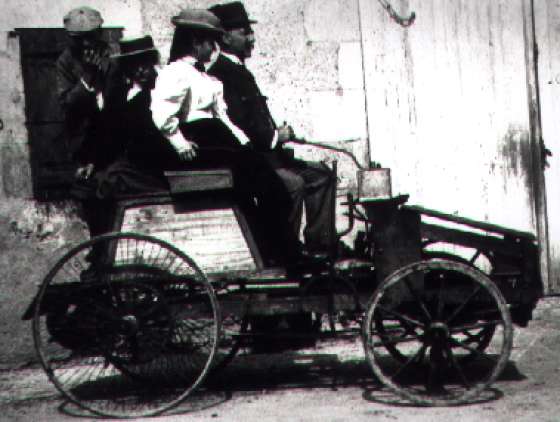
About 1865 and Austrian inventor, Siegfried Marcus, built and road tested a simple four-wheeled vehicle with an internal combustion engine that used liquid fuel. Ten years later he produced a second liquid-fueled vehicle which ran successfully and is now preserved in a museum in Vienna as forerunners of the modern automobile – early cars in their infancy.
In 1875, the Austrian engineer Siegfried Marcus (1831-1898) made this petrol-driven motor car. Top speed is 4 mph, the car worked well but unfortunately he did not realize its commercial potential until Karl Benz produced the first commercial motor car.
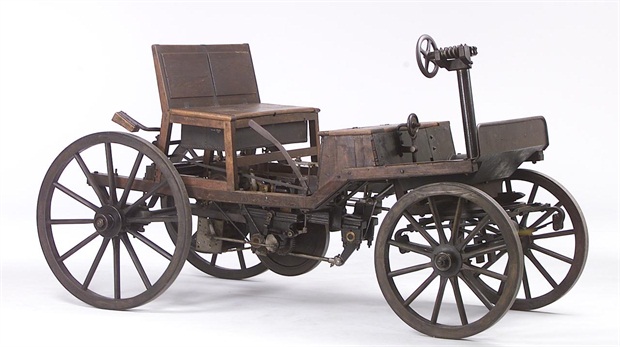
Nikolaus A. Otto, a German inventor, built the most direct ancestor of today’s automobile engine in 1876. Otto’s engine for the early cars used the four-stroke principle of operation – intake, compression, power, and exhaust. Car engines today operate on this principle. Otto’s engine originally operated on coal gas but was soon adapted for use with other fuels. Otto’s engine provided a compact yet powerful engine, much different from the cumbersome, noisy and clunky engines a few decades back. These early cars were important to the developments that would come later.
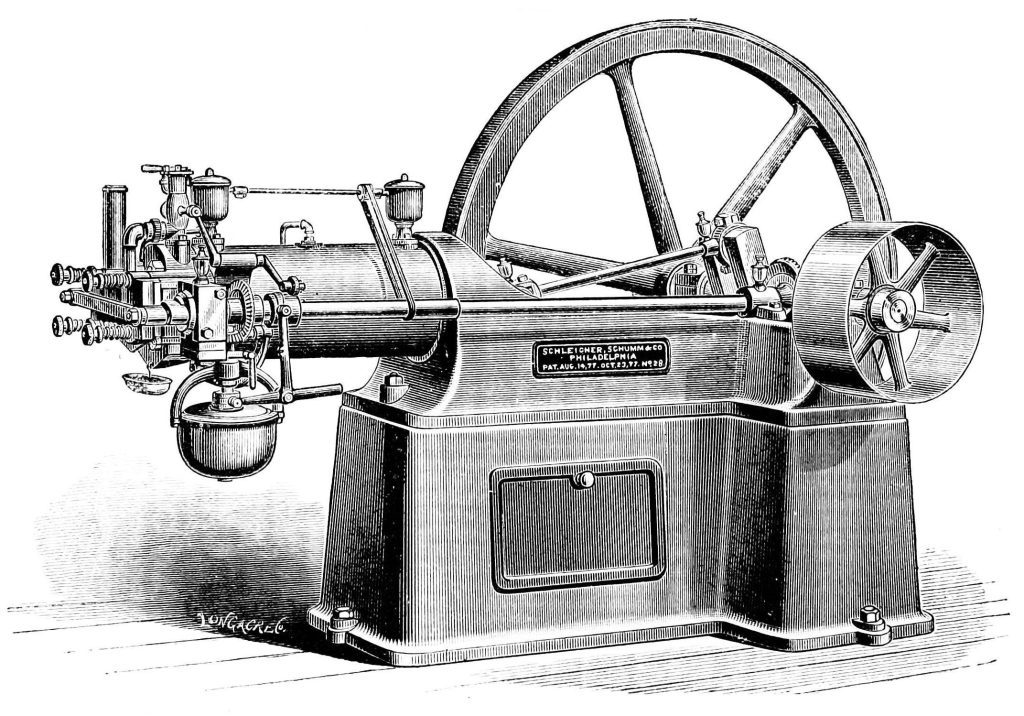
Gottlieb Daimler and another German, Karl Benz, are usually credited with being the earliest builders of successful automobiles that used internal combustion engines. Each produced a motor car in 1886 and they are now classic automobiles that command very high prices for classic car collectors. Daimler produced light, reliable, medium-speed gas engine. The design formed the basis for the modern car engine.Benz concentrated on the idea of a vehicle fitted with a gasoline motor which combined with body, chassis (frame and wheels), and other parts into an efficient unit. The pair produced excellent early cars.
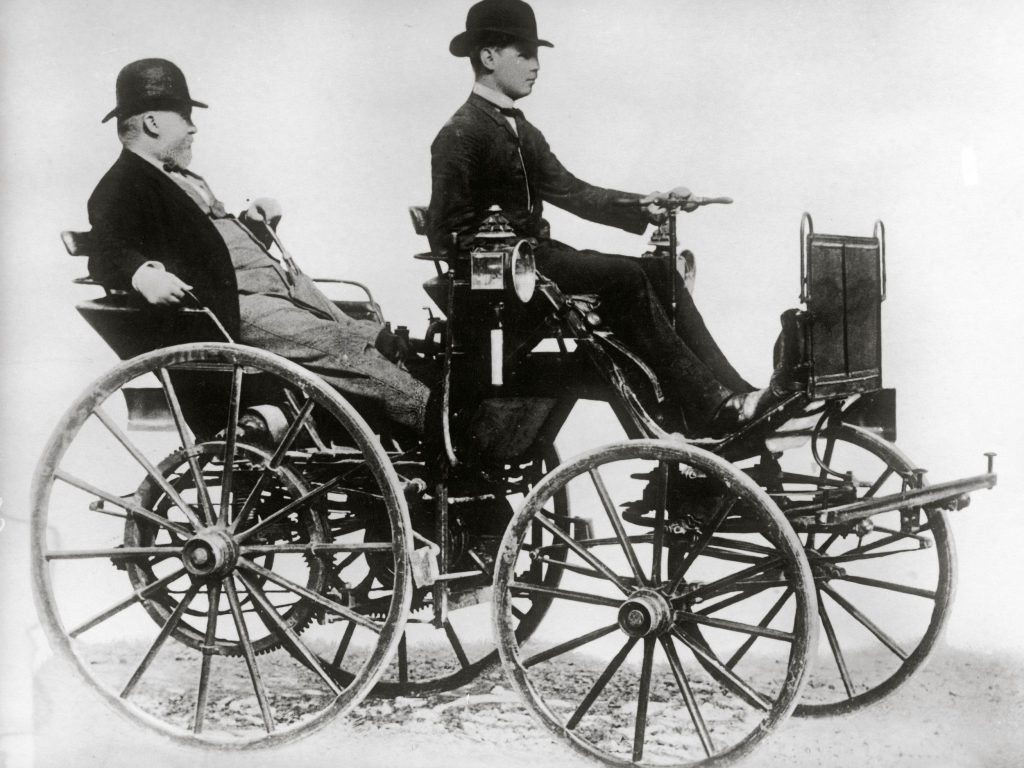
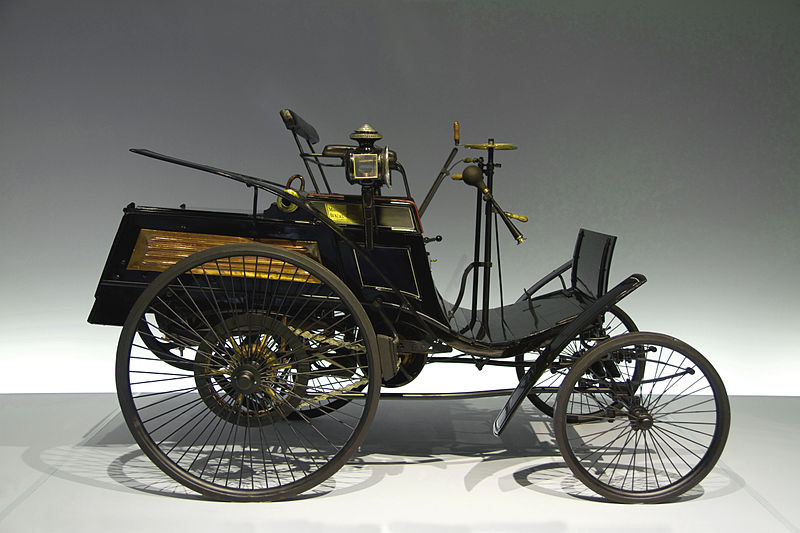
In the early 1890’s, a French engineer, Emile Levassor, produced a chassis to fit Daimler’s engine. The resulting vehicle, called the Panhard-Levassor, is regarded by many automobile historians as the first real forerunner of the modern automobile. It was the first motor vehicle in which the frame was made separately from the body and suspended from the axles by springs. It also was the first to have the engine in front and the now-standard clutch-and-gear transmission. These early cars are really good collectibles, so very few exist today.
Between 1890 and 1930, the concept of the automobile emerged and resulted in competing types of automobiles powered by electricity (batteries), gasoline, and steam. The electric car was superior to the steamer or the gasoline car because it ran quietly and smoothly, without the vibration and smelly fumes of its rivals. It did not require a complicated set of gears or clutches to transmit the power to the wheels or to run in reverse. But they are good to only 20 to 40 miles. After that, the batteries run down. And the low speed (12 miles per hour) did not appeal to prospective buyers.
Steam-driven cars were even more popular than electrics in the late 1890’s and early 1900’s. There were more than 100 different makes of American steamers during those times. Steamers offered more power than electrics, quiet operation, and smooth performance. But their drawbacks were serious. It took a long time to build up steam and and procedures were complicated. Also, owners were afraid that the boiler might explode.
The best remembered of the steamers are the Stanley Steamers, made by twins Francis and Freelan Stanley. They even set a land speed record in 1906 of 127.6 miles (205.9 kilometers) per hour at Ormond Beach, Florida. The last steamers were built in the mid-1930’s. You can still find these early cars in car museums.
The internal-combustion engine is much more complicated than either the steam engine or the electric motor. But its advantages outweigh its disadvantages. Although it has more moving parts, it could produce more power in relation to its weight than the other engines.
Early Cars (late 1800s)
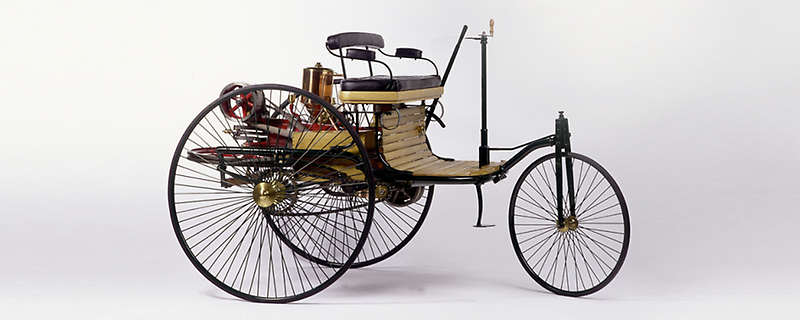
1867 Benz Car
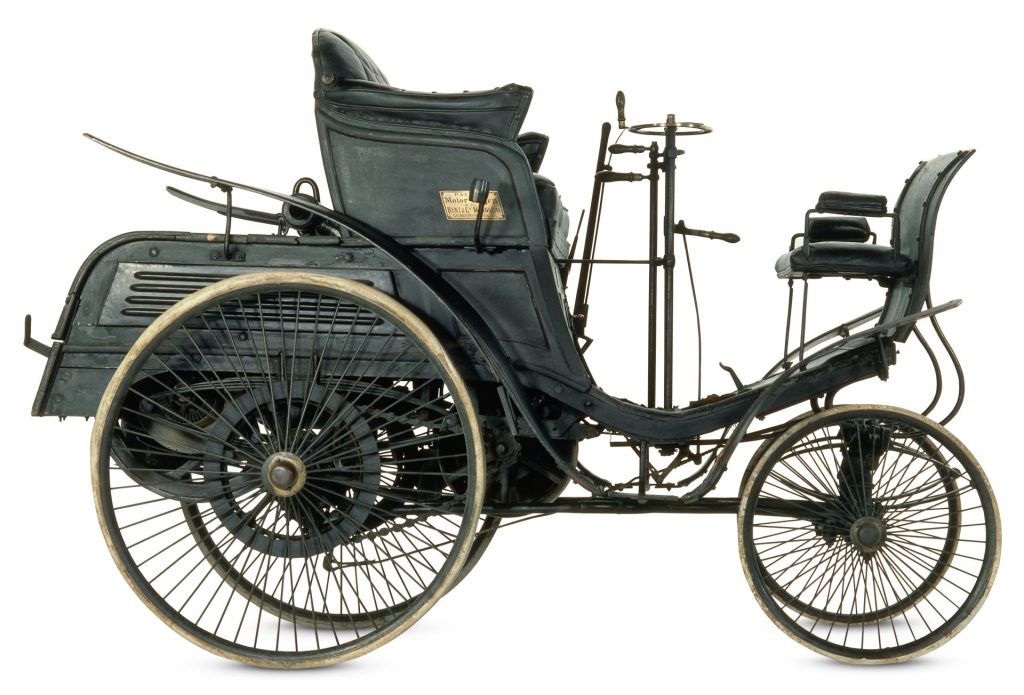
1885 Benz Car
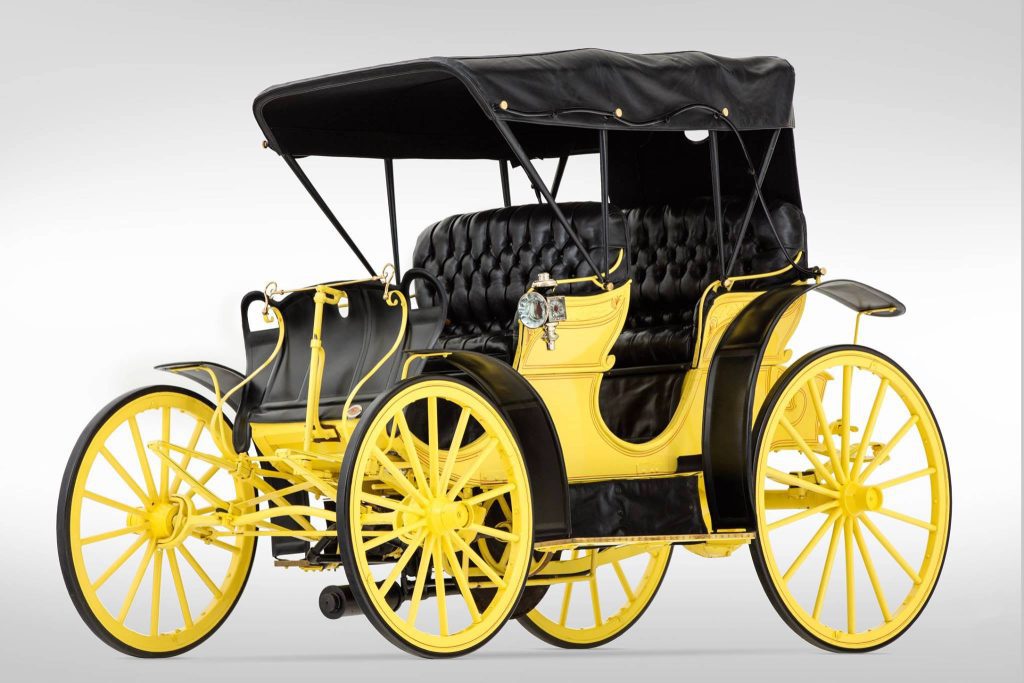
1895 Chicago Benton Harbor Autocycle
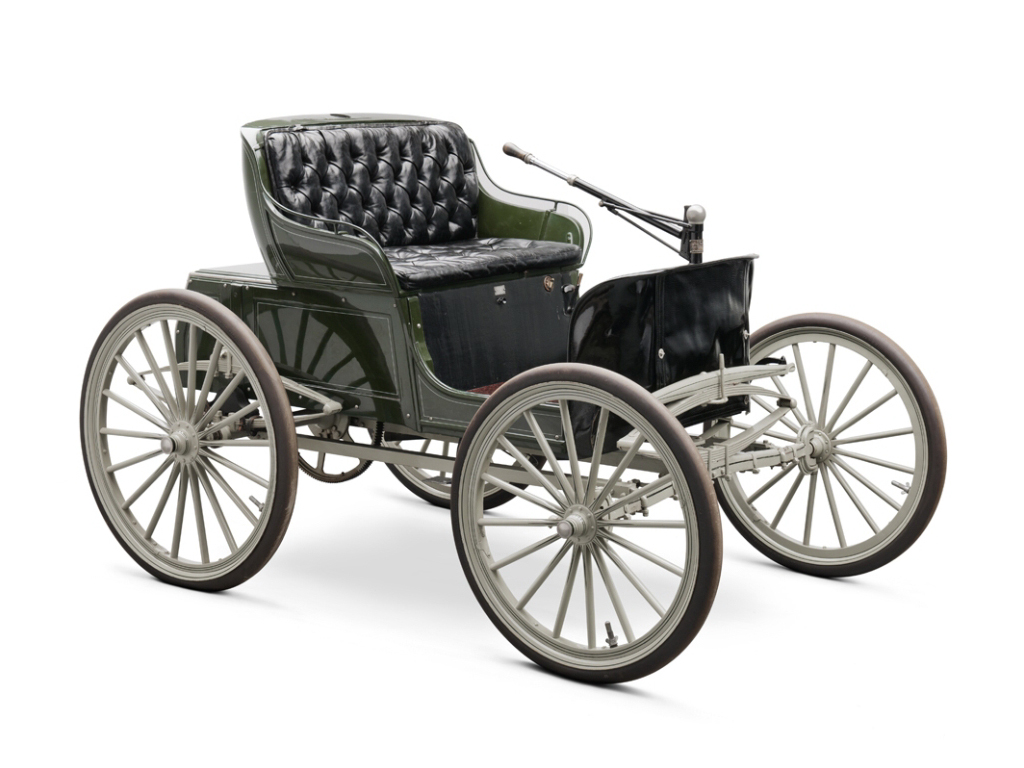
1896 Duryea Runabout
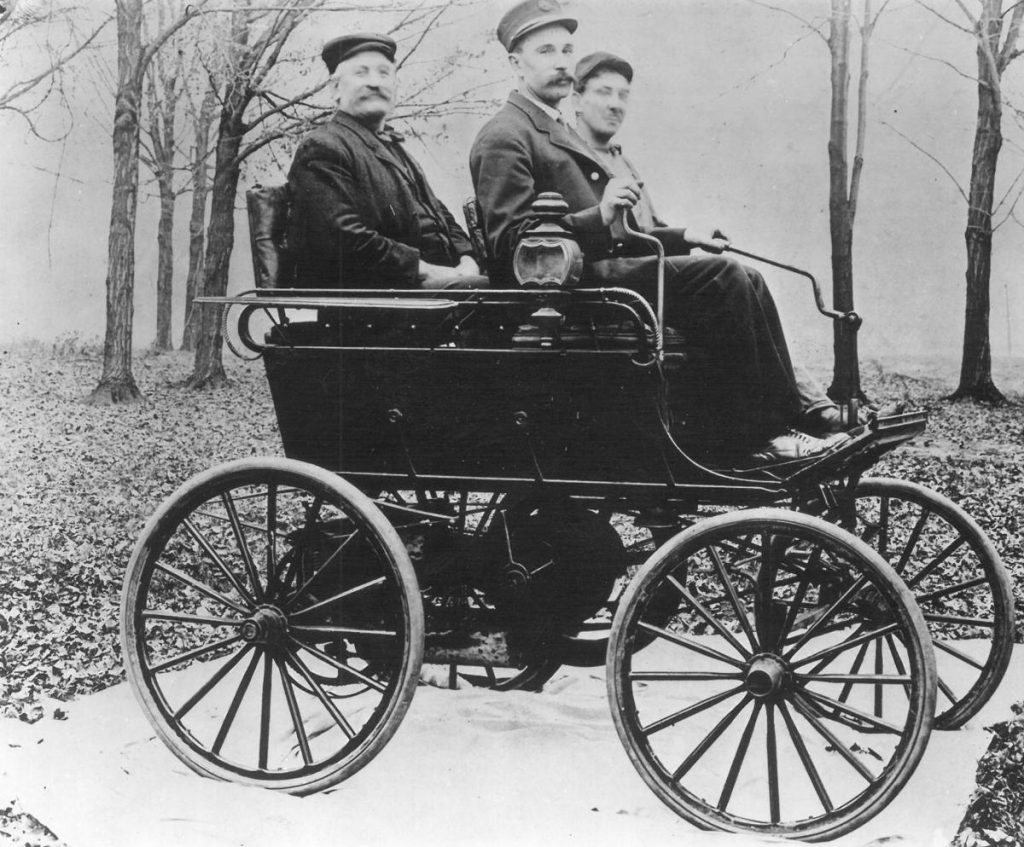
1897 Oldsmobile
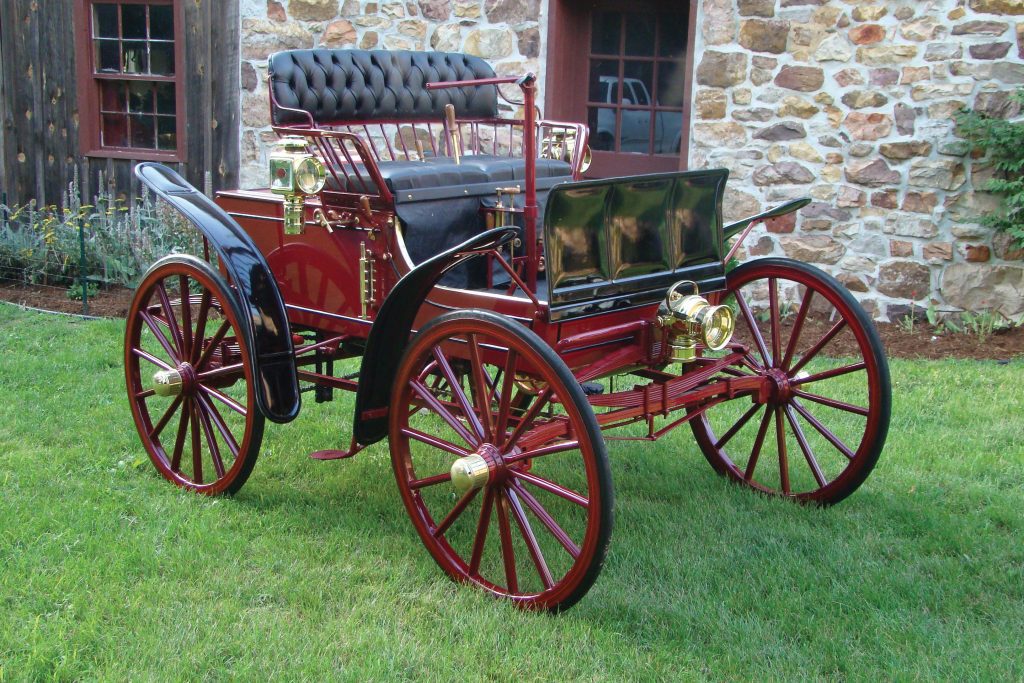
1898 Stover High Wheeler
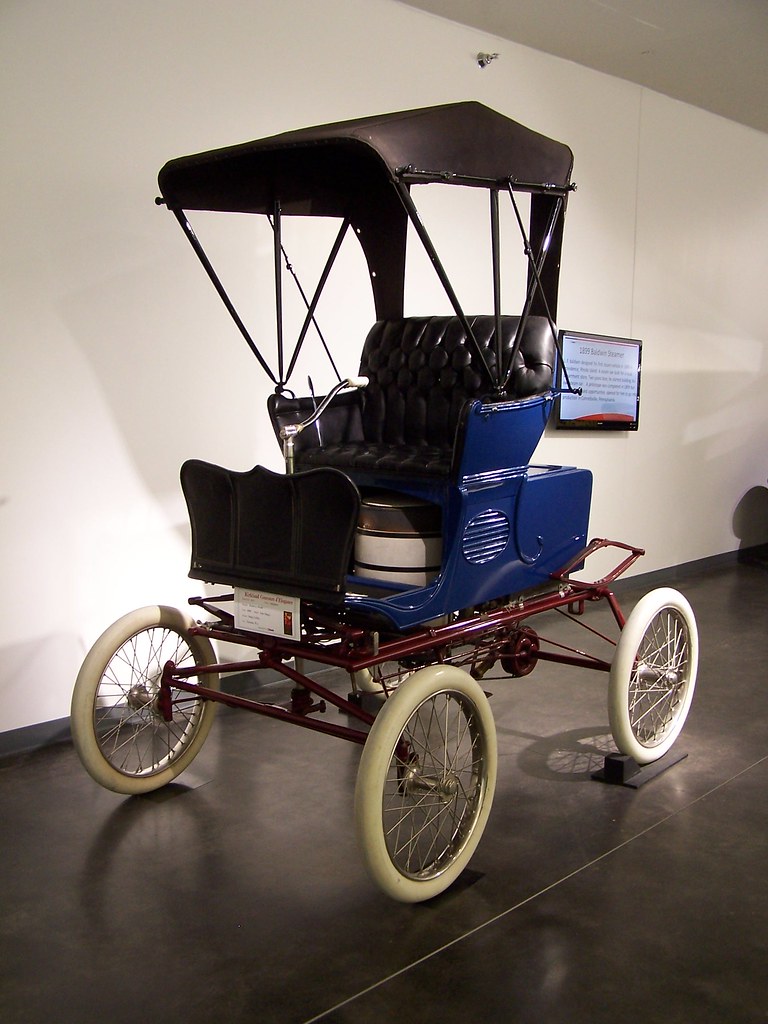
1899 Baldwin
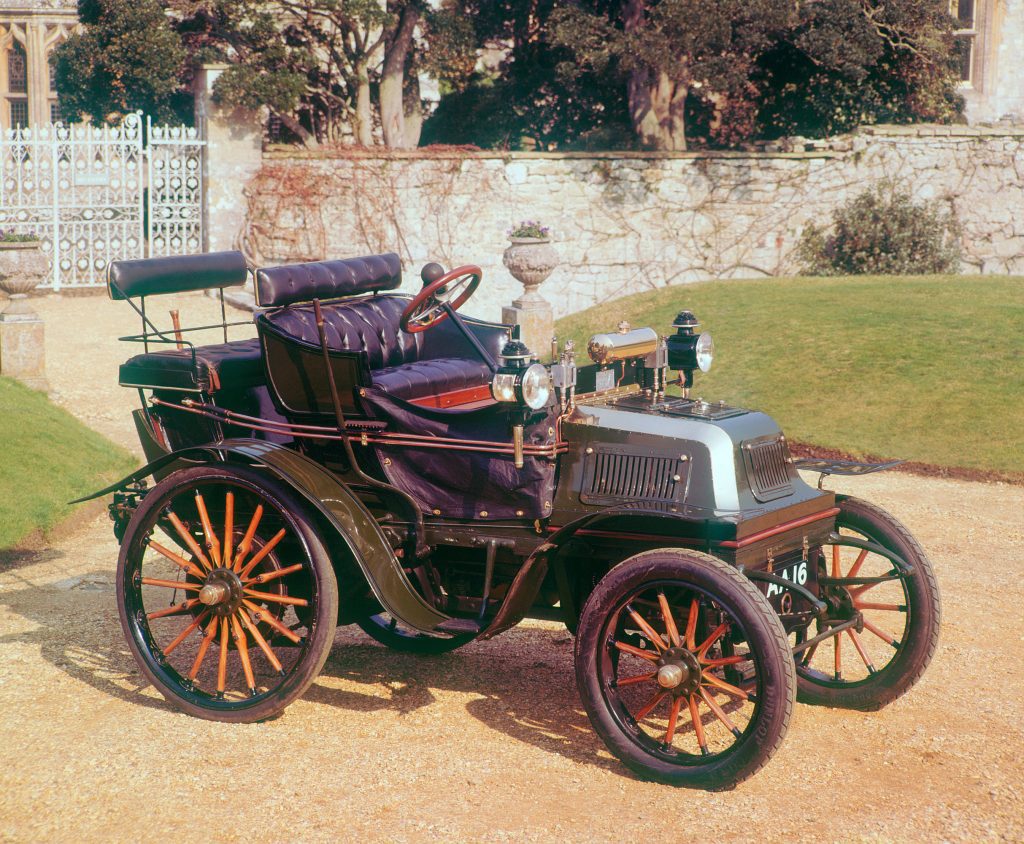
1899 Daimler Car
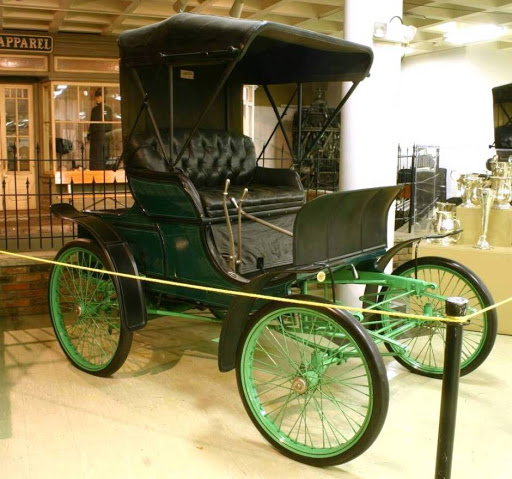
1899 Winton Phaeton
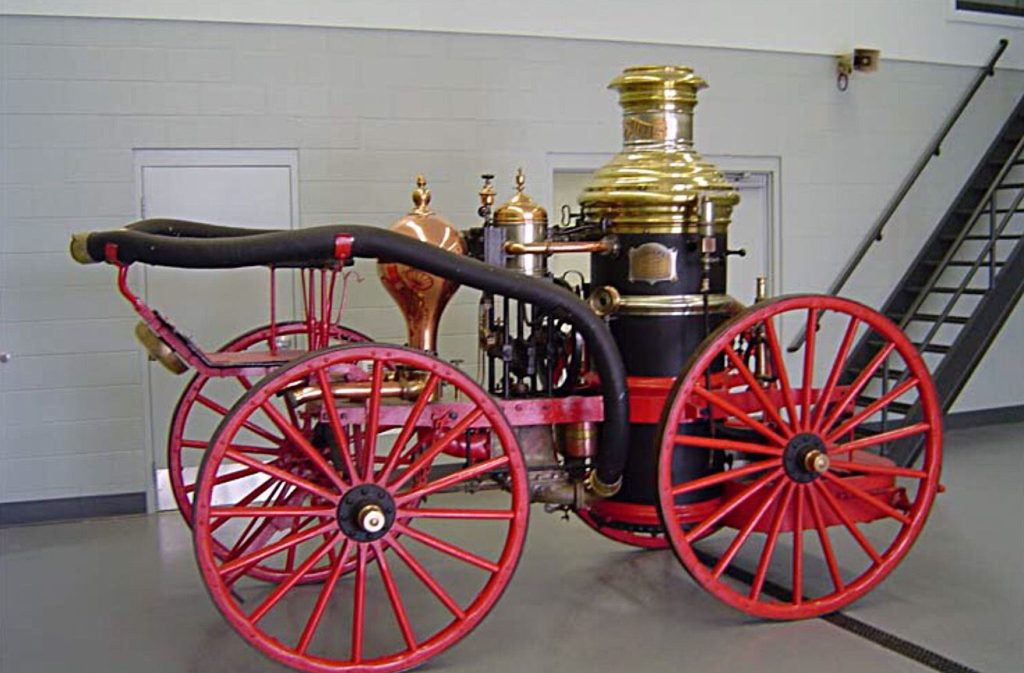
1895 American LaFrance Steamer
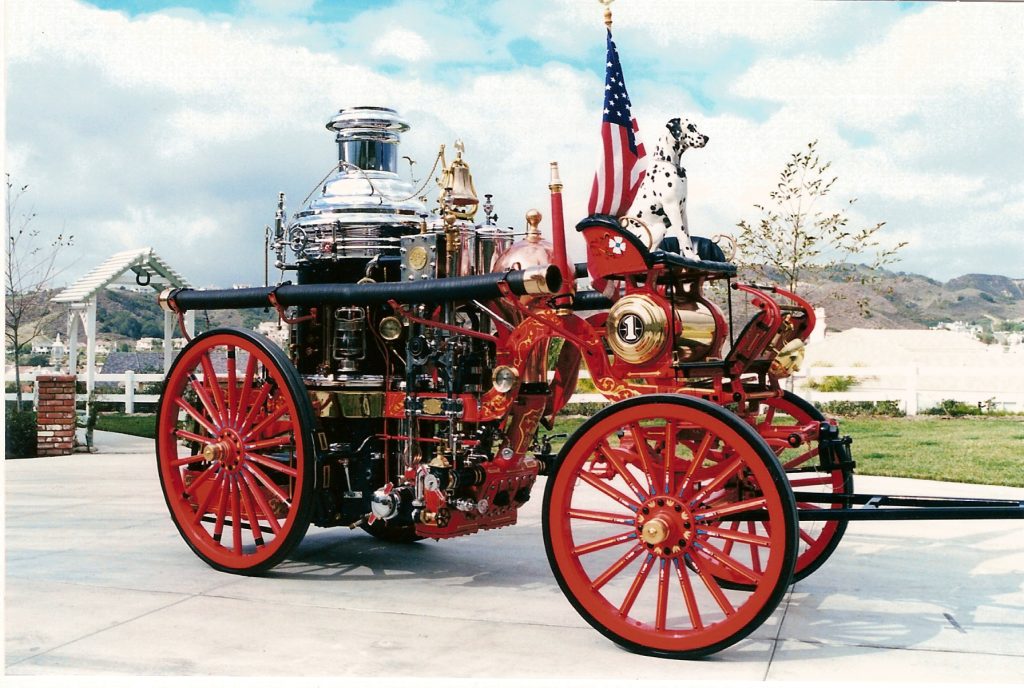
1902 Steam Fire Engine with Blaze
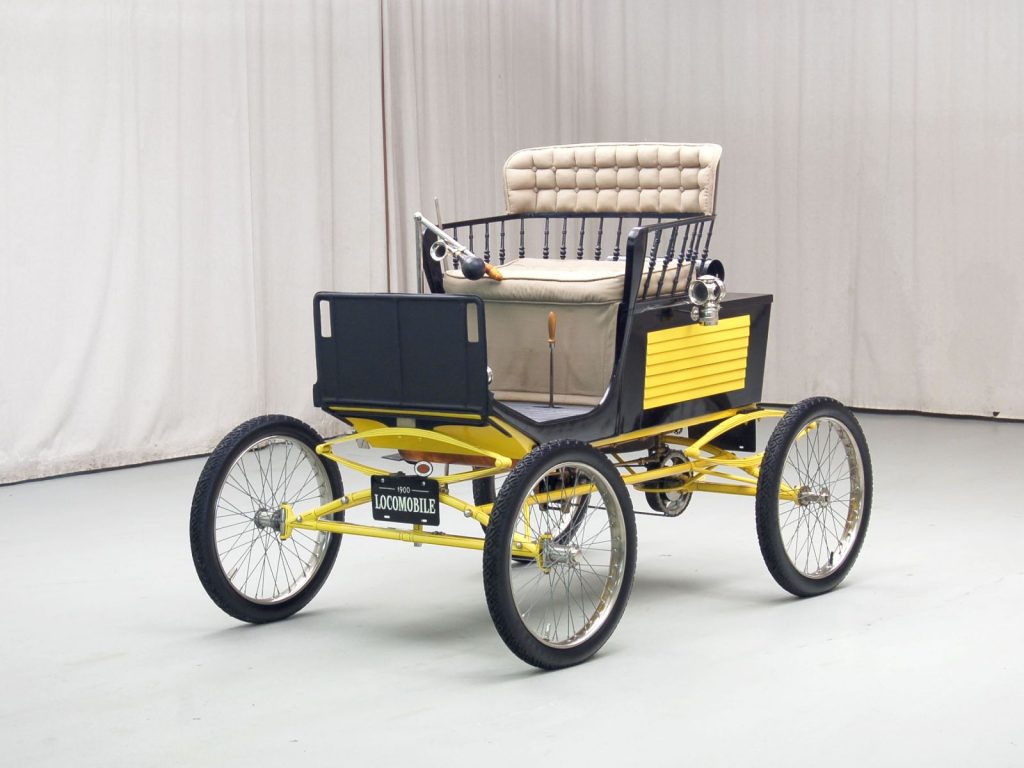
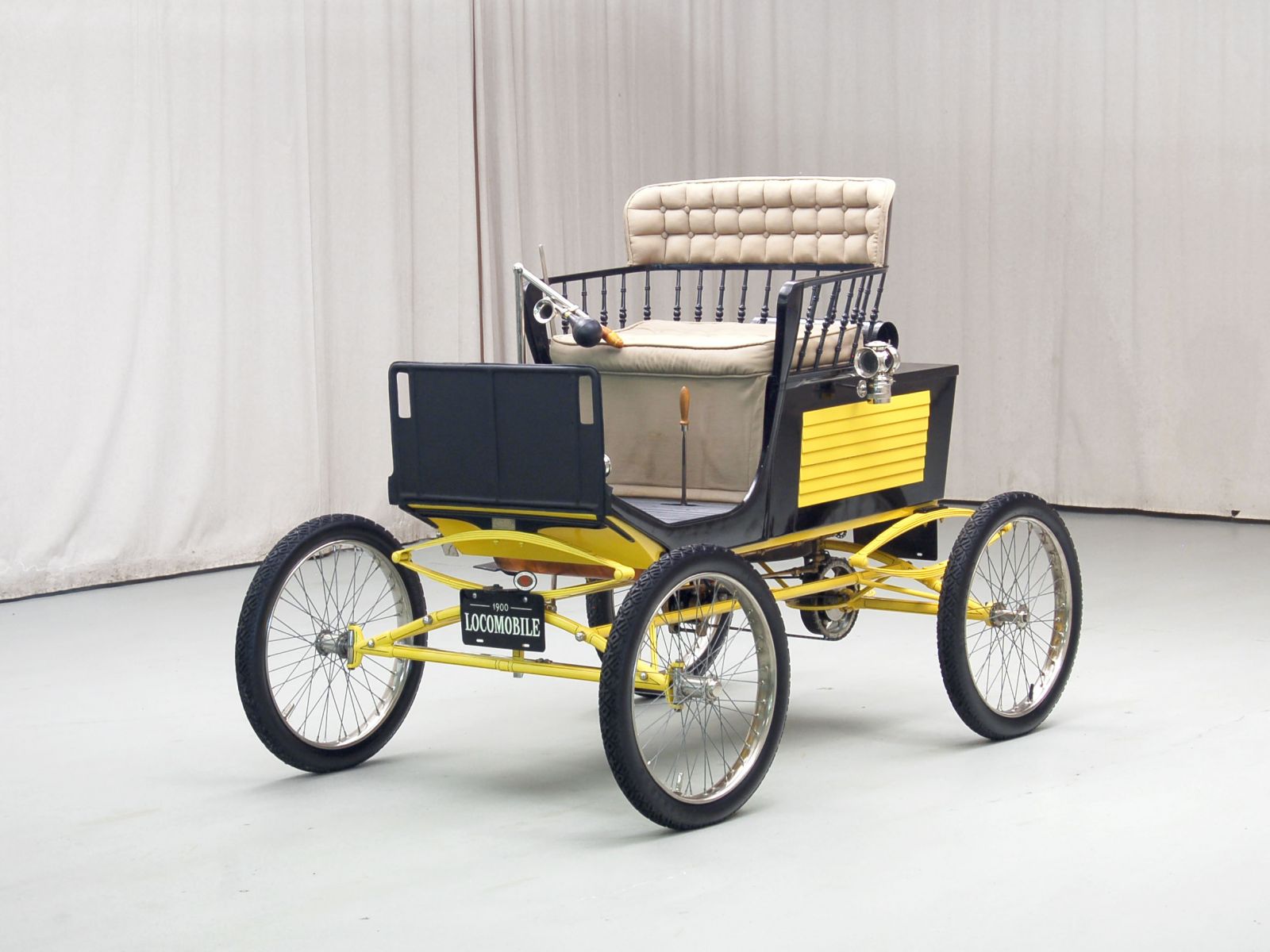
1900 Locomobile Steam Runabout
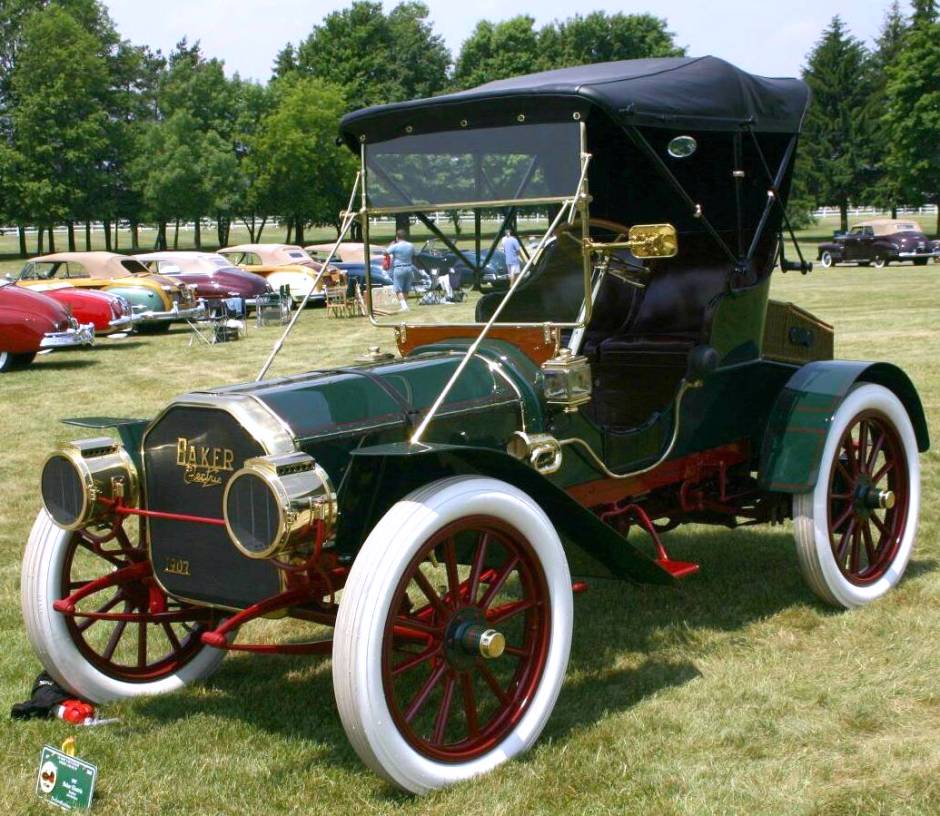
1907 Baker Electric Car